
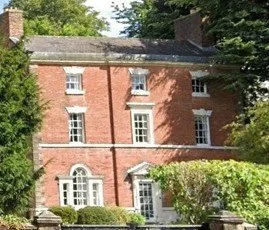
The Poplars, Station Road
The Poplars
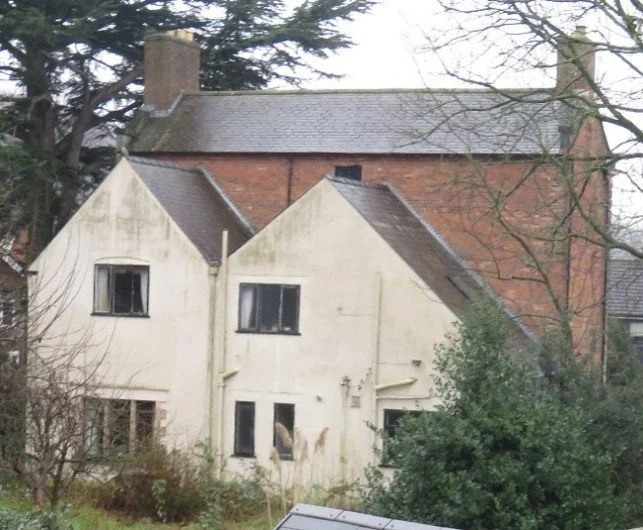
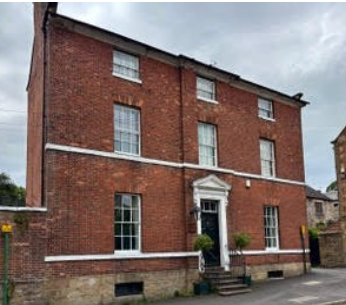
In Station Road Little Eaton there is a rather grand 3 storey Georgian style house which looks like it should be in a town square instead of being in a village. At the rear of the rather formal structure there is a modern extension which doesn’t sit comfortably with the aesthetics of the main house. Neither the house nor the extension seem to fit in with village vernacular architecture.
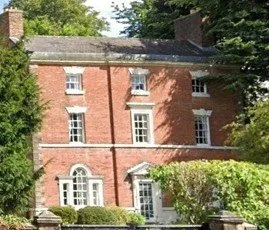
The front of the house shows classical adherence to proportion and symmetry while the rear shows a disregard for these and a different kind of aesthetic.
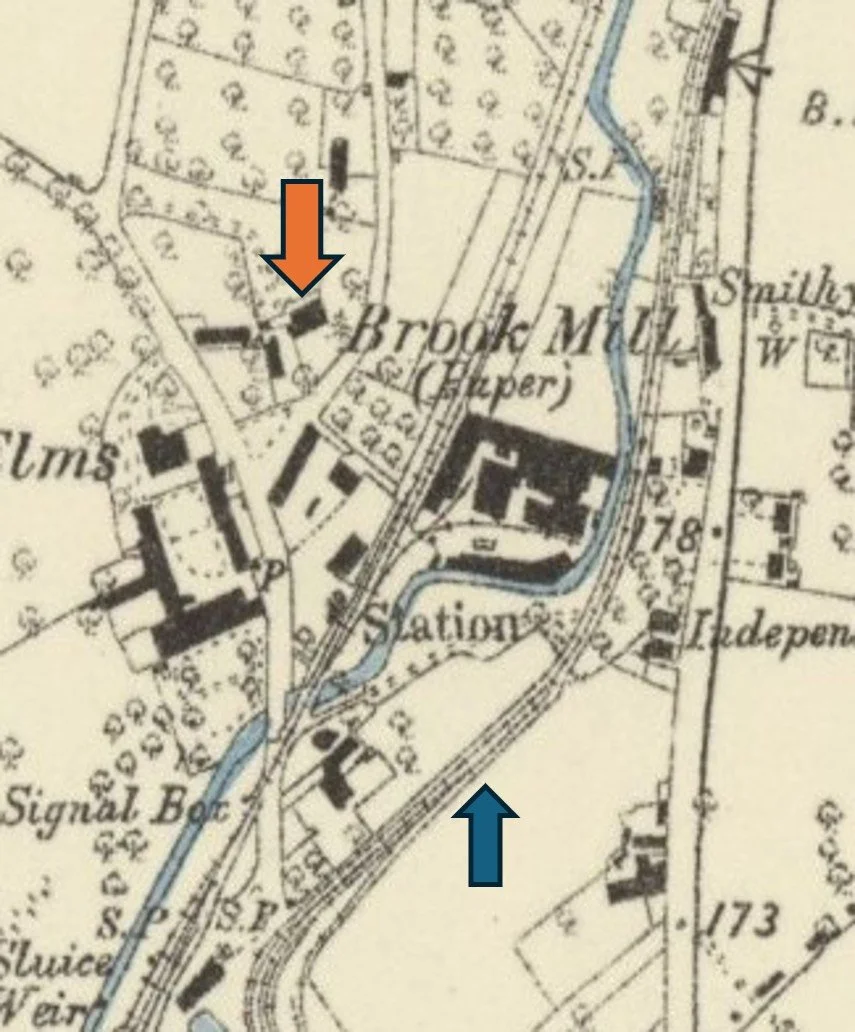
To find the origins of the principles of these design matters we go first back to a map of 1880.
Here we see the Poplars (arrowed orange) in fairly close proximity to the Brooks Mill paper mill, the river, the railway station and the gangway (blue arrow). This all makes sense. The Poplars was occupied by Sarah, the daughter of John Tempest and her husband Robert Harvey who was a manager in the Tempest family business. The imposing house overlooked the Brook Mill and was at the centre of a new industrial hub where products and materials were passing through day by day. A classical styled house in an industrial area was probably not unusual at the time.
There are examples of this in Wirksworth and other towns. It was probably a way of displaying wealth and authority while at the same time keeping an eye on the business. The mystery of the Poplars is that that it was almost certainly built before the industrial landscape was there.
When was the house built?
The mill was built in 1854, the railway in 1850 and the gangway was started in the 1790s. The Poplars was most likely built in the 1780s but it could have been before this.
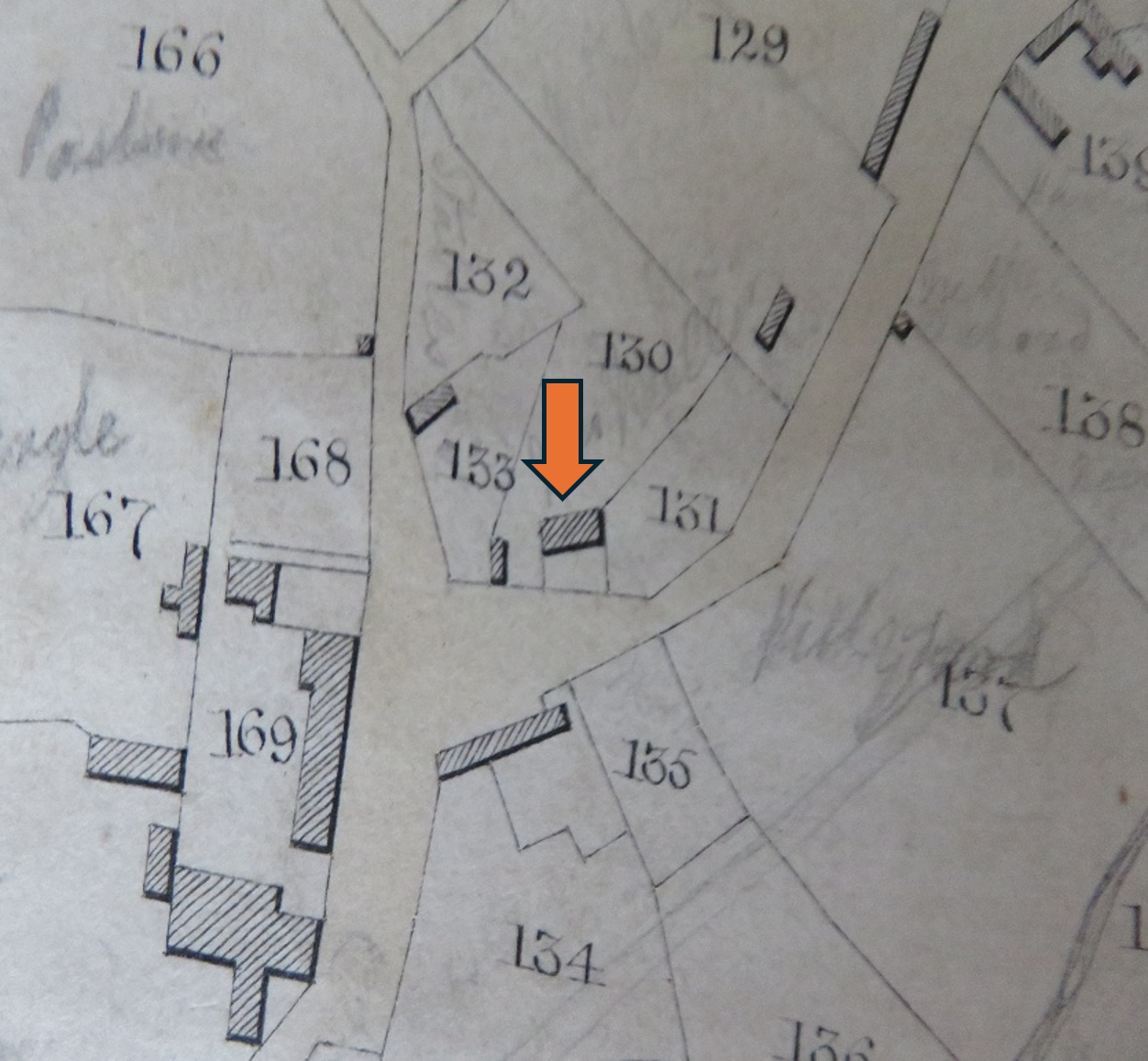
A map from the 1780s shows the Poplars surrounded by houses and farmland devoid of any industrial features. The mill, the gangway and railway must have only existed in the minds of visionaries. Was Thomas Tempest a visionary I wonder?
Did he see the house as a centre of a future industrial hub yet to be conceived?
It is possible the house was built on the foundations of an existing farm building but this is unlikely as a Georgian house had to adhere to certain plan form proportions. It is also unlikely that an architect was involved in the design as drawings showing Georgian proportions and features were being published in the late 1700s for builders to work from.
In 1782 there was a sale of an unused building in Derby designed by Joseph Pickford (1734-1782), one of the leading English architects in the reign of George III.
It is understood that components from the sale were used in the building of the Poplars and this most likely took place before the turn of the century rather than after it.
Another factor in establishing the date of the Poplars is the size of the facing bricks used. The brick courses appear to be about 3 inches. Before 1784 bricks were a bit less than 2 inches high (1 and 5/8ths inches). A brick tax was introduced in that year of 2/6 (12.5p) per 1000 bricks to pay for the American war. As a result brick makers made their products with an increased height (2 and 5/8ths inches).
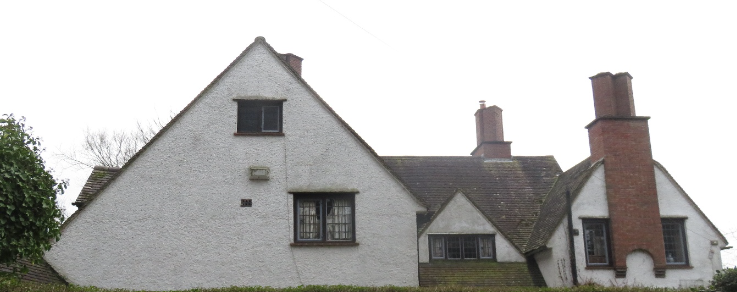
Sometime just before the year 1900, Percy Currey designed a rear extension to the Poplars for his brother Henry who then lived there. The extension abandoned the classical style of the main house. Currey was building in a similar form to the better-known architects William Lethaby (1857 – 1931) and (Charles Voysey (1857 – 1941).
It is possible that Curry’s extension was seen as something new and exciting in the village. There is also the idea that Currey was trying out new forms in preparation for the design of a new home for himself.
There are similar houses in Derbyshire, including this one in Wirksworth. These are elegant houses built to impress using Georgian proportions.
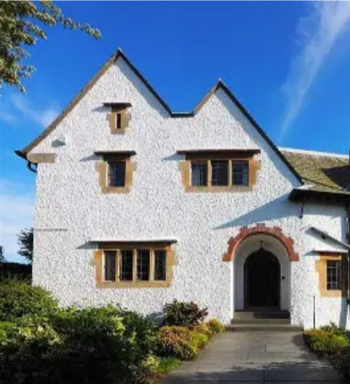
This is The Homestead by Voysey which was built over 5 years after Currey’s extension to the Poplars so it is possible Currey was something of a pioneer.
The Hatherings, shown below, was built by Currey to be his family home when they moved from Wyndesmore in Little Eaton.
In the listing entry by Historic England for the Poplars in 1967, the main house is described in some detail while the rear extension is not referred to at all.
Owners and Occupiers
Once built, the house was probably lived in by the Tempest family, but this is speculation as who lived there in the early years is not recorded.
Then, in the mid 1850s, Sarah Harvey (nee Tempest) and her husband, Robert Harvey moved in with their three children. Robert was the manager of The Tempests Brook Paper Mill.
The Harveys left in 1875 and went to Derwent House to live with Sarah’s widowed father and The Poplars became home to Robert’s sister, Ellen Williamson, and her daughter, Ellen Selina.
In 1894, Ellen died and Ellen Selina became the second wife of Henry Jackson. The couple had a son, William, who died at birth. Henry Jackson’s daughter by his first marriage joined, them at The Poplars.
In 1897, the house was taken over by Henry and Annie Currey and it was then that Henry’s brother, Percy, designed the extension at the back of the house. The Curreys left in 1904. Between 1904 and 1933 there are records of the Brown, Warde and Harris families living in the Poplars.
In 1934, The Poplars was bought by Charles Alfred Oliver (known as Alf), and his wife Annie (nee Piggs). In the advertisement for sale, the property was described as containing two reception rooms, five bedrooms, a bathroom, kitchen orchard and gardens.
Charles ran an unlicensed drinking club in the house.
Annie Oliver was the aunt of Cathie Woodward who describes in her book the house as she knew it as a child. Annie Oliver died in 1944 and Alf left the house and died in 1949.
By 1944, George and Doris Thums, and their married daughter, Norah, lived in the house with Norah’s husband Jack Sanders. All four worked in the drinking club which, allegedly, was frequented by the entire Parish Council who did most of their business there.
In 1948, the club was raided by the police and the customers, including the Parish Council, escaped through a back window. The Thums were fined for selling alcohol without a licence.
In 1949, the house, together with the 4 adjacent cottages, were sold to the Hatherly family.
1780 -1851 Tempest family
1851-c1880 Robert Harvey and Sarah Harvey (nee Tempest) + 3 children
1881-1893 Ellen Wilkinson (nee Harvey) and daughter, Ellen Selina
1893-1897 Ellen Selina and husband Henry Jackson + his daughter
1897-1905 Henry and Annie Currey
1905-1920s The Brown, Warde and Harris families
1920s-1944 Charles and Annie Oliver and 3 daughters
1944-1949 George and Doris Thums, + daughters, including Norah and husband.
1949- Hatherley family
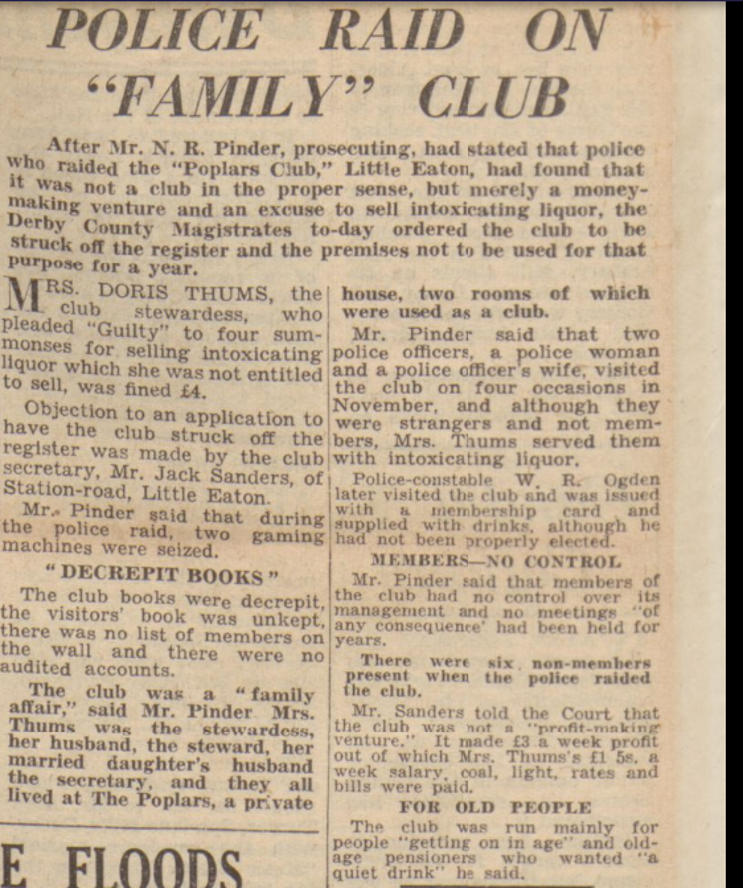
Newspaper article from 1948 about the police raid on the club at The Poplars
Memories of The Poplars - extract from Cathie Woodward’s book
“The Poplars started going to seed in the 1930s. The former graciousness of a gentleman’s residence was fading fast. Now, behind the Georgian designed façade and the solid, never opened, door, were bare upper storeys.
Annie and Alf’s activities were concentrated at the rear of the house (Currey’s extension) where a stone flagged passage dissected the rooms ……The kitchen, cold underfoot but warmed by the huge range. The sink underneath the back window overlooked a neglected wilderness. A little window looked out over old stables, rank rough grass, broken down walls and sheds…. Geese, dogs, cats, Rose the donkey, fat pigs erupted out of the corrugated iron roofed stone sties”
Article by Chris Stone and David Young