

Traders and Shops (1930s - 1950s)
John Carlier (with help from his sister Anne Wood, Brian Carman, Glenda Harrison and Barbara Adams) has put together a fascinating insight into the traders and businesses around in the village in the mid twentieth century.
There were numerous shops and traders throughout the village, a lot more than there are today.
If you would like to add any further comments please feel free to get in touch.
Alfreton Road
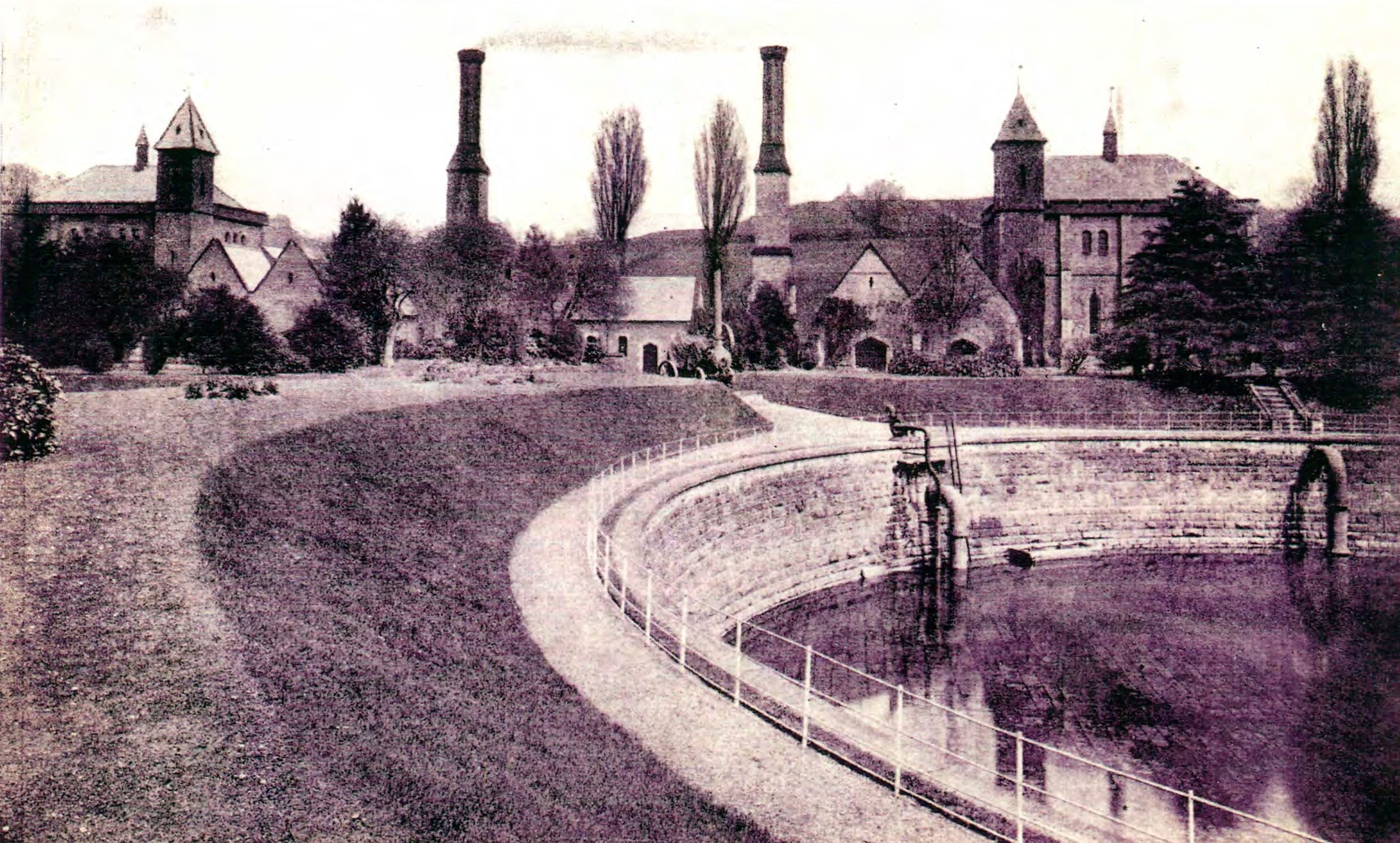
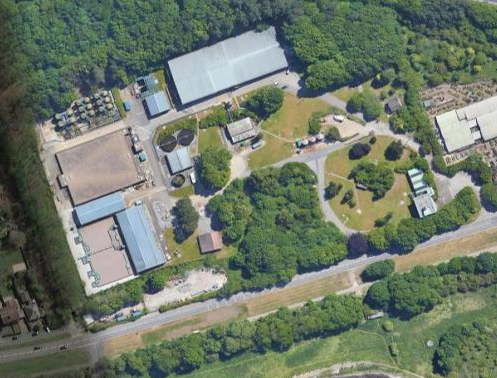
The Water Works
The superintendent was Mr Bagguley. Read the full history and more details about the water works under topics.
Additional activity was charging accumulators for those in the village who did not have mains electricity.
Gregory’s Shop
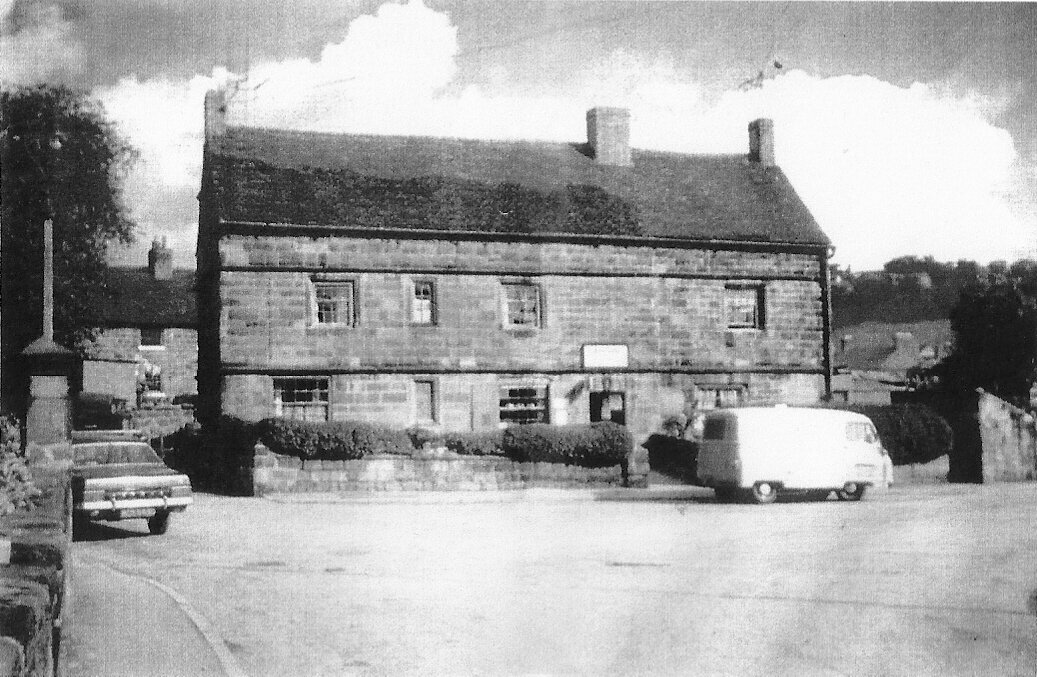
The Toll House at the north of the village, next to the Anchor Inn, was the site of shop throughout much of the 20th century. The shop was run by the Gregory family. Originally, as in the photograph shown, the shop was called The Quarry Tea Room, offering refreshments to travellers passing through the village. Later, it became a shop, selling confectionary and some groceries to local families, often remembered for the rows of jars of boiled sweets sold in paper bags.

The Quarry Tea Rooms in the early 20th Century, which later became Gregory’s shop. The Anchor inn can also be seen on the left.
The café and shop were run by Eva Gregory and her son, Peter. Eva’s husband, William, worked as a motor mechanic. The family lived in a flat above the shop. Eva Greory died in 1976, Peter died in 1991 and Willia died in 1997.
The shop was demolished in the early 1990s when new houses were built in the garden and the access road, Park View, was widened.
Carlier Brothers
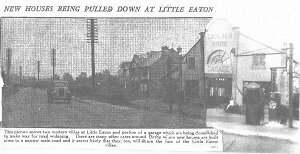
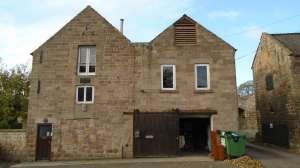
The Carlier brothers had a garage on Alfreton Road, and moved to the brewery building on Duffield Road when the garage was demolished to make way for the (short lived) dual carriageway which ran into the village from what is now the A38 roundabout to Toll Bar Stores.
Other shops and businesses on Alfreton Road
Brownsword – No.30 Alfreton Road. Also had a large timber building on the canal bank at the junction of Alfreton Road and Duffield Road
Kerney – painter and decorator at No 42 Alfreton Road. He also had premises on Siddalls Road Derby. Ralph, one of his sons, became landlord of the Bell and Harp
Sewage Works – opposite Toll Bar Stores but on the other side of the canal. Access was by a track past the Clock House. Apparently tomato plants were also on supply! (Tomato seeds can pass through the human digestive system and arrive at the sewage works unharmed where there is a plentiful supply of fertilizer).
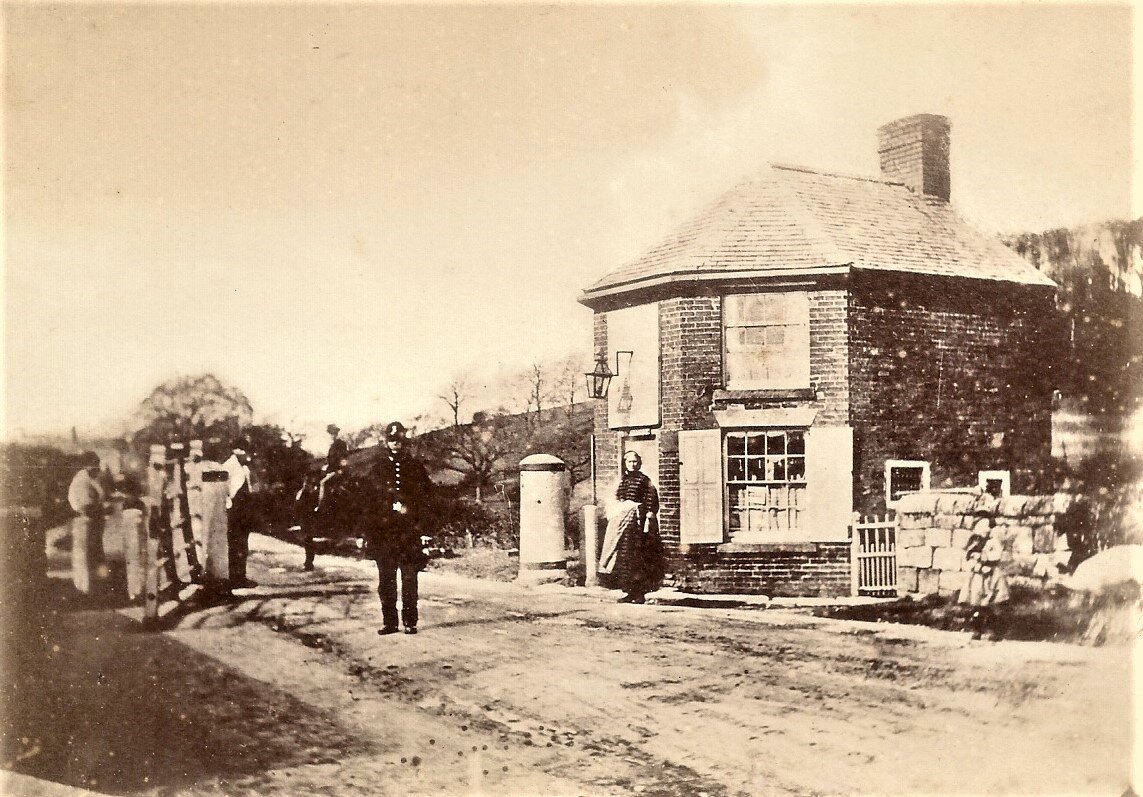
Toll Bar Stores – 54 Alfreton Road approximately on the site of the old Toll House. Shop was run by Mr. Evans. Later by Mr Gibson, then Mr. Boffey.
The pictures below show the original Toll Bar (thought to be the earliest photograph of Little Eaton).
Today the store is a private house.

Builders – Morris and Frank Mitchell. Morris Mitchell painted many village landmarks, which can be viewed in our collections.
Frank Camp – various enterprises. Father of Alan Camp of A.B. Camp and Sons
Ferguson – Haulage (mainly coal) – Garage was on the site of what is now Daisy Hill Stores
Lilian – ladies hairdresser – 102 Alfreton Road. Lillian rented a room from Mrs Brunyee
Bates – blacksmith and farrier. On site of current blacksmiths. Read more about the blacksmiths.
Pykett – Plumber (Glenda Harrison's dad). There was no central heating in most houses post war, so there were plenty of burst pipes in the winter. To watch Bill Pykett “wipe” a lead joint was to see an artist at work.
Bosworth - butcher.
Carman – Newsagent – Many of todays “grown ups” must have been a paper boy or girl for the Carman’s. The paper shop is now the Little Kitchen and still supplies newspapers. There was also a Mrs Reeve who had a newsagent's business covering the Leas, The Chase and Whitaker Lane. When she retired the Carmans bought her business.
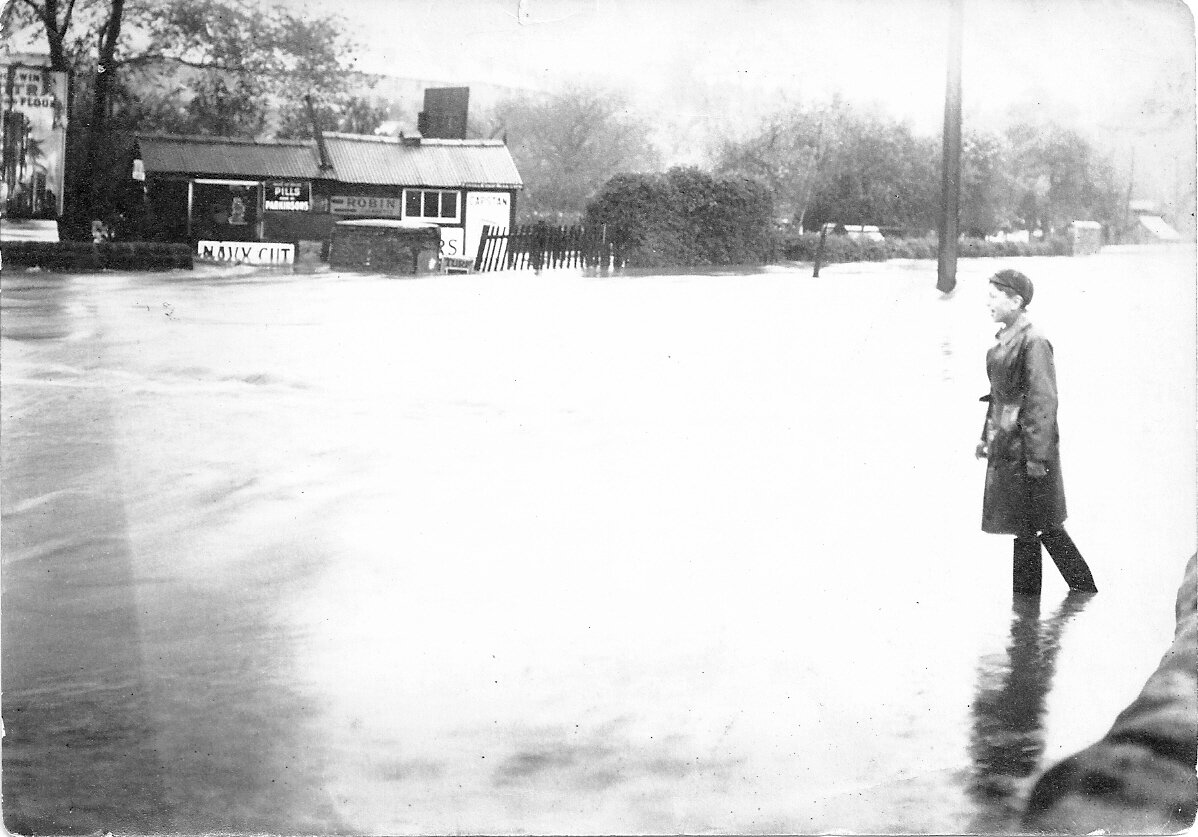
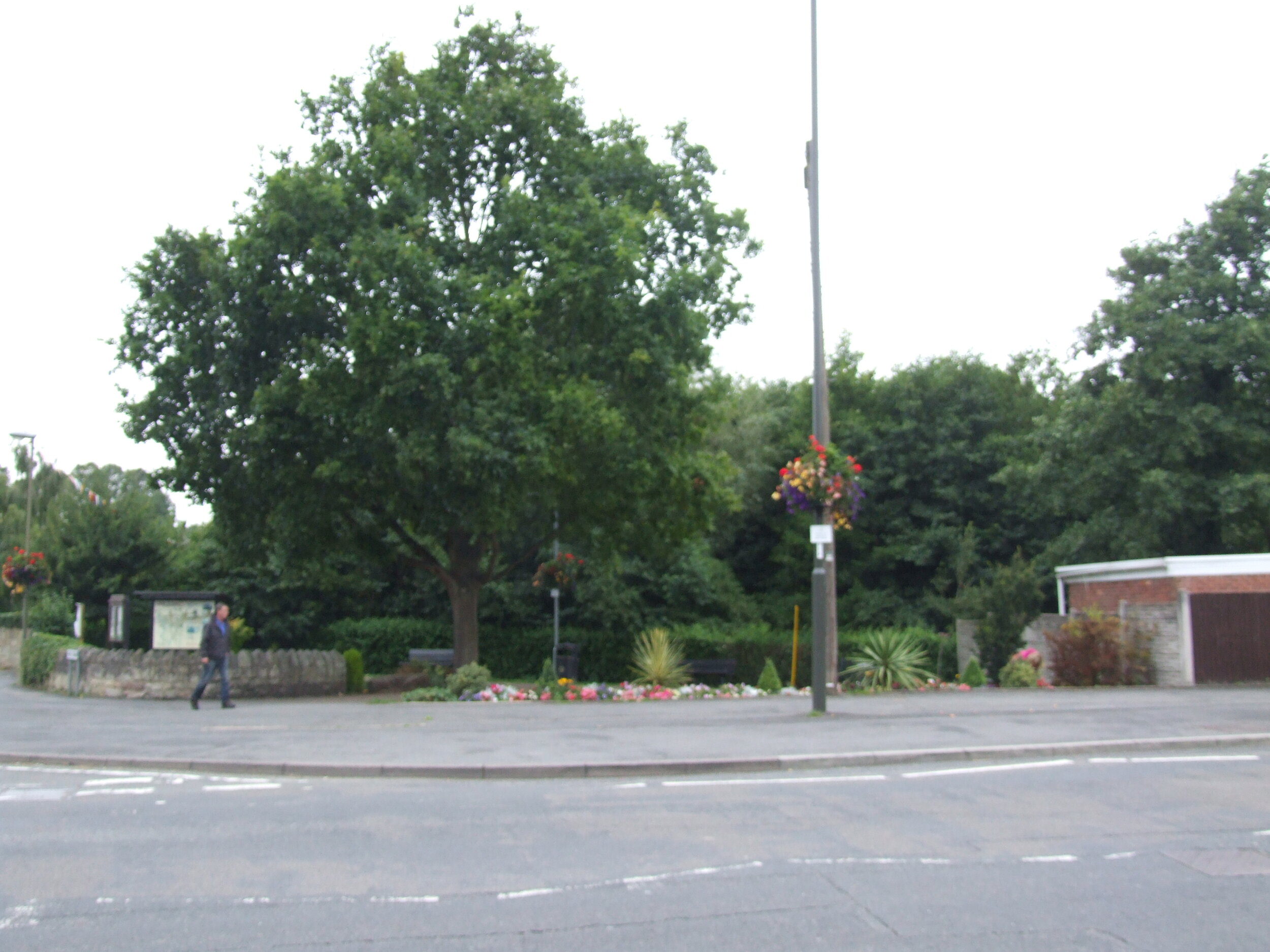
Williscroft Grocers (later Coopers) – a small wooden building opposite the newsagents. This is the area now known as Croft Corner. The name “Croft Corner” came from the old field map reference name.
The picture below shows the grocers shop during the floods of 1930’s, and croft corner in 2015.
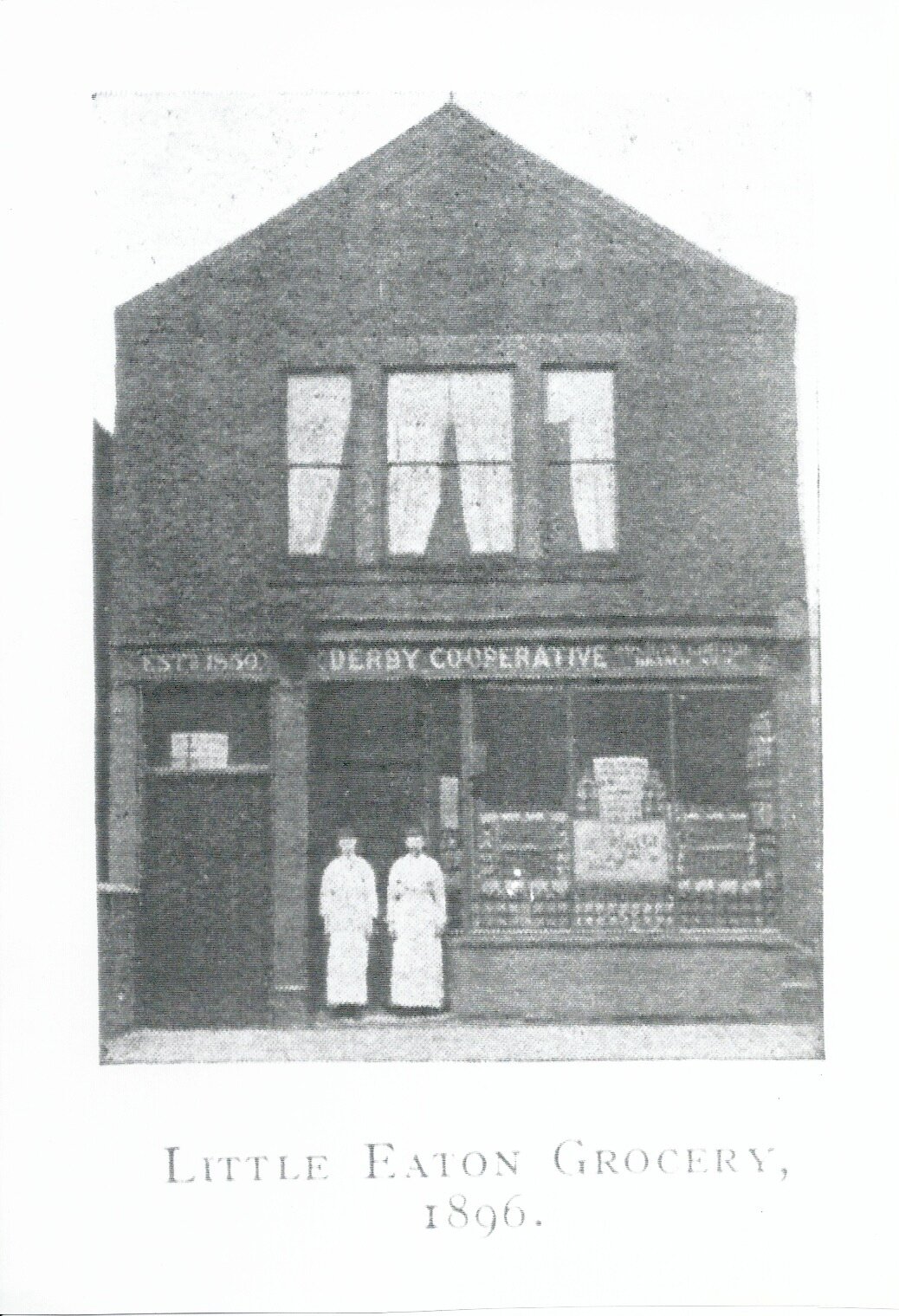
Co-op Store – two separate shops (grocers and butchers). Later Val Hammersley acquired the butcher's part and ran a hair salon. When Val retired the Co-op became the modern store it is today.
Ashforth – Fish and chip shop (later a Cafe and now the Greek restaurant). This building was the original Co-op

Dr. Collins (she took over from Dr. Morrison who left to join the army at the outbreak of WWII) The surgery was held in a house between the school and New Street. There was no waiting room so everybody heard the details of other peoples' problems. Quite an education!
Belle Seal was a corsetiere who ran the business from 190 Alfreton Road. One resident who was born a few doors down remembers “going into her wonderful workroom, she was a very talented lady” during the 1950s.
Edith Fox- Haberdasher and Draper. She operated from one room in Danesbury House which is just below Baines Hall.
Wright – Greengrocer – occupied the building which is now March Hair. Mr Wright had his own little lorry which was unusual at the time.
Frearson – grocer- situated in the front of one of the cottages between March Hair and Jack o' Darley Bridge.
Alton – Grocer and cafe. They had a monkey in an outdoor cage. The premises is now a private house near T'owd Lane at the northern end of the village.
Summerside -Grocer – Quite a large shop on the Chase.
Duffield Road
Norman Thums – Coal merchant and unofficial taxi Service.
Bill Cruise - Fabrication and (for a short time) petrol station
Alf (Pop) Carlier – The brewery . Off licence. On his death the licence was transferred to the Toll Bar Stores.
J.O.(Jack) Carlier -The Brewery – . Car repairer – Machine Shop – Ex WD Trader.
Tropical Fish Breeder and Beetroot Pickling factory!
Peckwash Mill – Military webbing manufacturer and later glove manufacturer.
Coley – Market Garden – Rigga Lane – The Outwoods was owned by the Coley family. Their gardener Jim Brown ran a business from the garden selling flowers, bouquets and wreaths.
Station Road
George Thums – The Poplars Men’s Club – Closed down when the police found an unlicensed penny slot machine on the premises. The locals claimed that here had been a misunderstanding and that the police should have gone to a very dodgy club in LONG Eaton!
Dowdings Mill (also known as Cudlip’s Mill and Brook Paper Mill - see Brook Paper Mill Fire in Newspaper Articles)
The mill changed recycled scrap paper into, amongst other products, toilet paper for armed services. Some of this found its way into many village WC’s.
Jackson – cobbler -operated from a very small stone “shed” half way down on the north side of the road.
The Town
Walters – Mr Walters was an undertaker and ironmonger operating from the barn of Brooks Hollow, opposite Church Farm (see painting below). Coffins were transported around the village on a barrow consisting of wooden frame on two bicycle wheels. No fancy limousines in those days!
Thums – Butcher – operating out of the Church Farm building facing the road and depicted in the Morris Mitchell painting shown below. The window of the shop is now filled in with red bricks.

Mason and Price – doctors - rented a room in Church Farm
Fred Marshall – Greengrocer – The shop was in a beautiful stone building where the chemist and Appletree surgery now stand. The original building was the Kings Head which, for some dreadful reason, was demolished to make way for what stands there today. After the pub closed, it became Pratts the grocer and then Marshalls.

Read a full history of all the farms by following the links below.
Oakdens – Elms Farm - Now farmed by John Salt.
Redferns – also known as Vickers, now demolished. Situated between Station and Church Lane.
The Furlongs – now operated by Barry Fitch.
Thums Farm (also known as Church Farm) - corner of the Town – now a private residence
Park Farm (also known as top Farm) – Thums, then Redferns – at the top of Vicarage Lane – now a private residence.
Walters Farm– Opposite Church Farm – now private houses.
Baileys Farm – also known as Moor End Farm - Opposite Baines Hall – now a private residence.
Johnson’s Farm, also known as Quarry Farm on Moor Lane – next to GEM Concrete – now a private residence.
Public Houses
A full history of all the pubs can be found by following the links below
The New Inn – Duffield Road- Landlord Arthur Cave followed by Norman Thums.
The Queen’s Head – Alfreton Road. This pub was originally called the Delvers Inn, after the delvers who worked in the quarries. Landlords in the middle of the 20th Century included Phil Richards, Russ Bloor, Arthur Eaton and the Hutchinsons.
The Anchor – Alfreton Road - now a private residence.
A stained glass window on the building depicts an anchor. This is thought to be the location of the hatch where liquor could be purchased for consumption away from the premises. This was know as an Off-licence or “Offy”.

Why was a pub in Little Eaton miles away from the sea called
“The Anchor”?
Does anyone know ?
The Bell and Harp – Alfreton Road – Landlord Lol Rice followed by Arthur Bacon.
The pub was formerly called the BELL HARP which is a musical instrument in its own right. It is suspected that the premises became the BELL AND HARP simply because of people not being aware of the meaning of the original name.

Bates, George – Stables at the rear of the Smithy.
Dr. Collins (on Alfreton Road between New Street and The Cosy)– You waited in the corridor (the surgery was in the lounge). This facility was later transferred to No.1 The Town.
Baines Hall – originally the Methodist Church, now a private house. Post war, the room underneath (down the steps on the south side) was used for social occasions, i.e. W.I. drama productions, wedding receptions, Scouts, etc.
Highfield Road – people called ‘Flower’ used to board dogs. Not sure if it was “Council approved”!
If you would like to add any further comments please feel free to get in touch.