Brook Mill
Brook Mill (The Paper Mill)
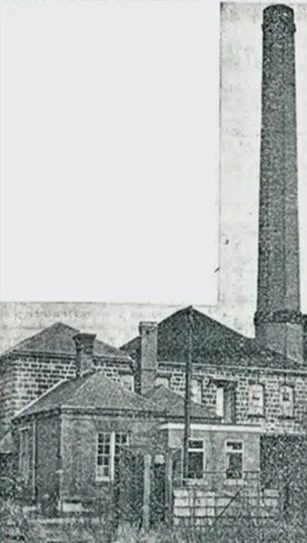
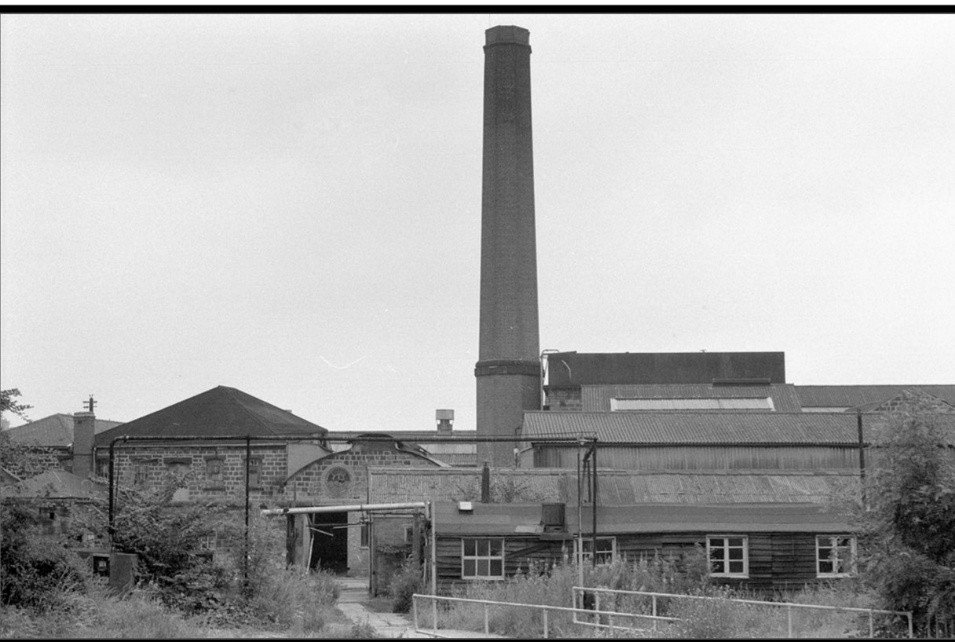
This Mill was built by John Tempest in 1854. At that time the paper making business was prospering and the main mill at Peckwash could not cope with demand.
The mill took in rags, collected by rag and bone men from Derby and surrounding towns and villagers. Workers in the mill (usually women and teenage children) sorted the rags into categories and passed them to other workers who soaked and pulped them. The pulp was then pressed and rolled into paper.
Owners and Managers: Tempest and Harvey
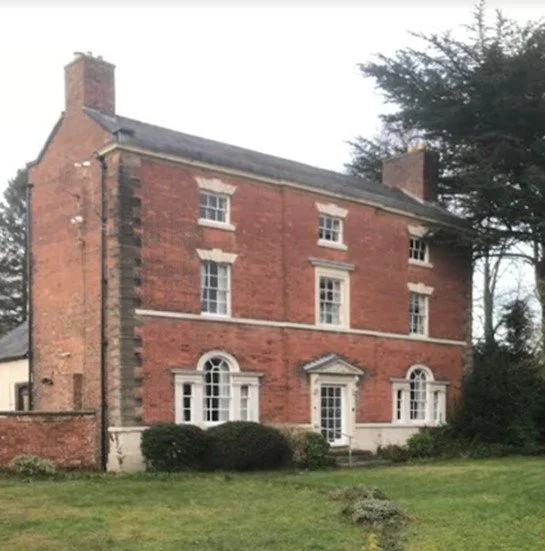
The Poplars on Station Road
When the mill opened, Robert Harvey was appointed as manager. Harvey was John Tempest’s brother-in-law, married to his sister, Sarah; and John Tempest was married to Robert Harvey’s sister, Selina.
A large house, The Poplars, was built for Robert and Sarah Harvey and their family. They lived there until 1873 when they moved into Derwent House on the death of Sarah’s father. In 1888 Ellen Williamson, sister of Robert Harvey, moved into The Poplars with her daughter Ellen Selina and her second husband, Henry Jackson. The house was later occupied by Henry and Annie Currey and later still became a private drinking club run by George Thums. The house has been owned by the Hatherley family since the 1950s.
Owners and Managers: Cudlips and the fire
The Brook Mill was not owned by the Tempests for long.
In 1880 it was sold to the Cudlip family, and in 1888 there was a serious fire at the mill.
Mr Cudlip, who lived next door on Station Road, dispatched his coachman to Derby for a fire engine but was told that the engine would not leave the borough. He then went to Derby station, and an engine was sent along the railway but that engine was held up by the gates in Little Eaton because the signalman could not be found to open them. Eventually, John Tempest Harvey (son of Robert Harvey) from Peckwash Mill was alerted and he sent a manual engine and his staff from there to put out the fire. Meanwhile, three buildings and their contents were destroyed and some machinery was damaged. However, the factory was insured. It was restored and was able to carry on.
More details are available in the article about the fire in the Derby Mercury in August 1888.
Owners and Managers: Dowdings and Harvey
In 1906, the business was sold to the Dowding family. They also acquired Derwent House. In 1942, Roland Harvey was appointed as manager. Roland Harvey was the grandson of Robert Harvey and Sarah Tempest. He had left Little Eaton in the 1920s but remained in the paper making business. On his return to Little Eaton, he and his family lived in Bryer (No 12 The Town). The mill made paper bags for the sugar industry.
The Workers and where they lived
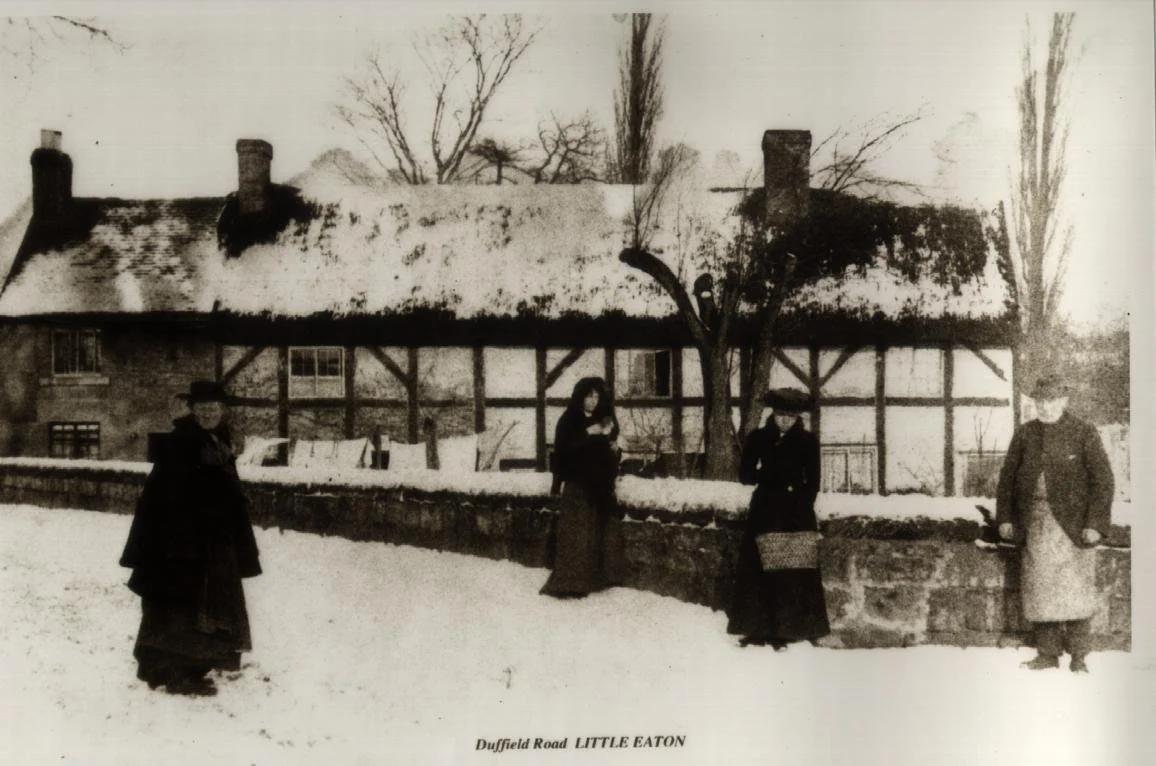
Poplar Cottages, Duffield Road/Station Road, now demolished
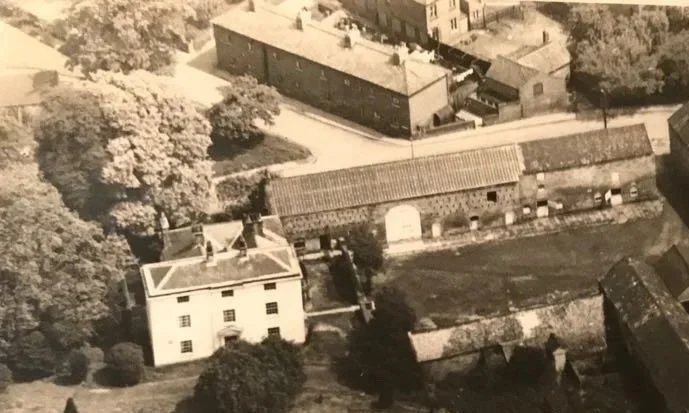
“Scotch Row” cottages opposite Elms Farm at the end of Station Road, now demolished
There were two rows of cottages next to the mill. One of these were “black and white” timber, stone and plaster cottages, with thatched roofs, probably dating back to the 17th century. These were on the east side of Station Road, next to The Poplars. The second, on the west side of Station Road were of brick, and built especially for workers at the mill.
In 1955 100 men and 20 women worked at “Dowdings” Mill, 33 of them resident in the village. Some workers came from Scotland, and the eastern terrace became known as “Scotch Row.” Families living there and working in the mill included the Metcalfs, Clarkes and Bradshaws.
Both rows of cottages were demolished in the 1950s.
In 1954, the business was sold to The British Coated Board and Paper Company and began to falter. Roland Harvey and his family left the village. The company began to falter, eventually closing in the 1970s. Many of the buildings, including the chimney, were demolished.
Industrial units replaced the mill (appropriately named The Old Mill industrial estate), many of which in original mill buildings. Part of the site became housing (Campwood Close).
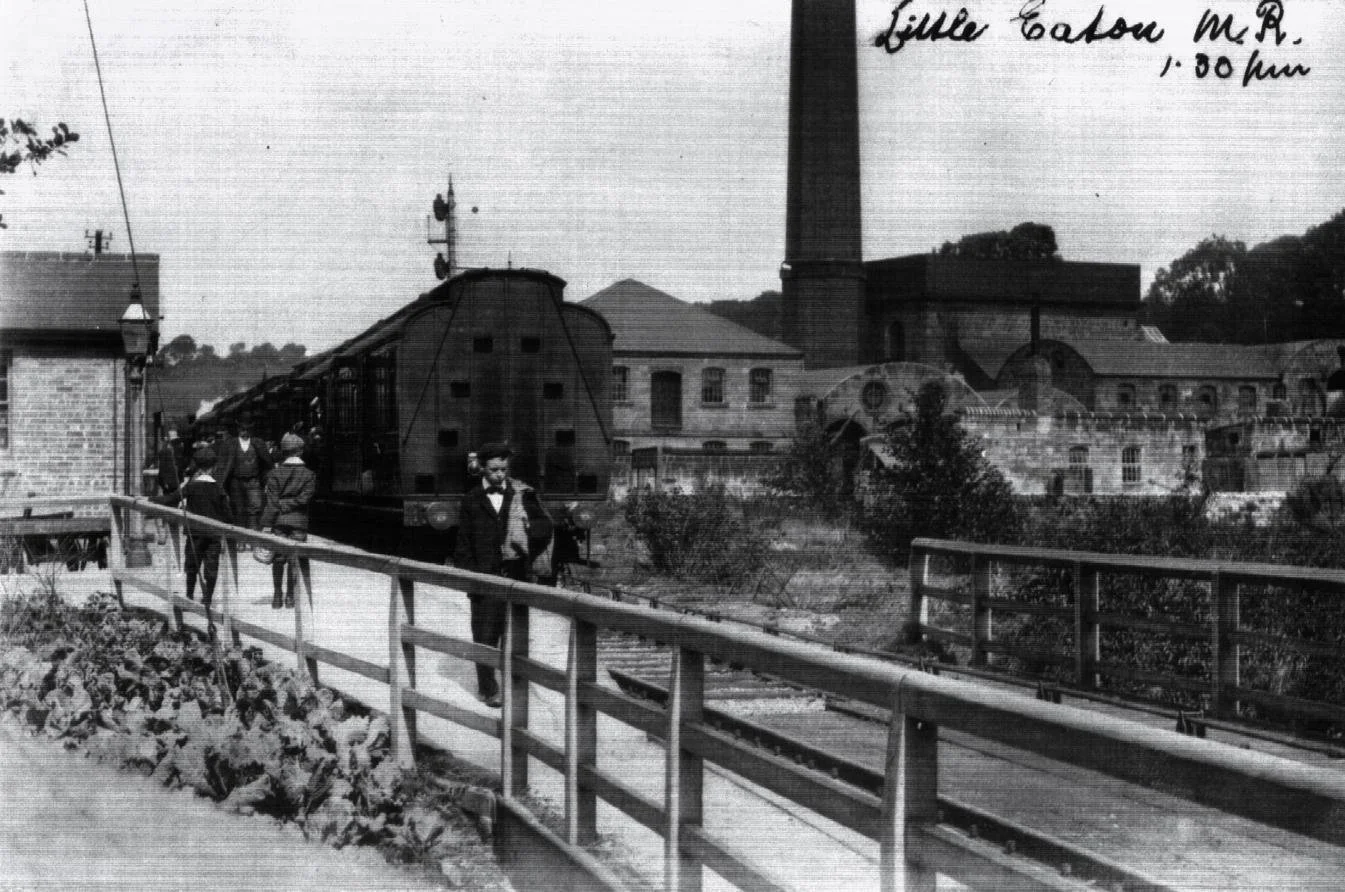
Little Eaton Station, with Brook Mill in the background

Map 1888 showing Brook Mill (now the Old Mill Industrial Estate) and the railway line. The Poplars, Poplar Cottages and Scotch Row cottages can also be seen opposite the Elms Farm on Station Road.