Mount Pleasant
Mount Pleasant, Windy Lane
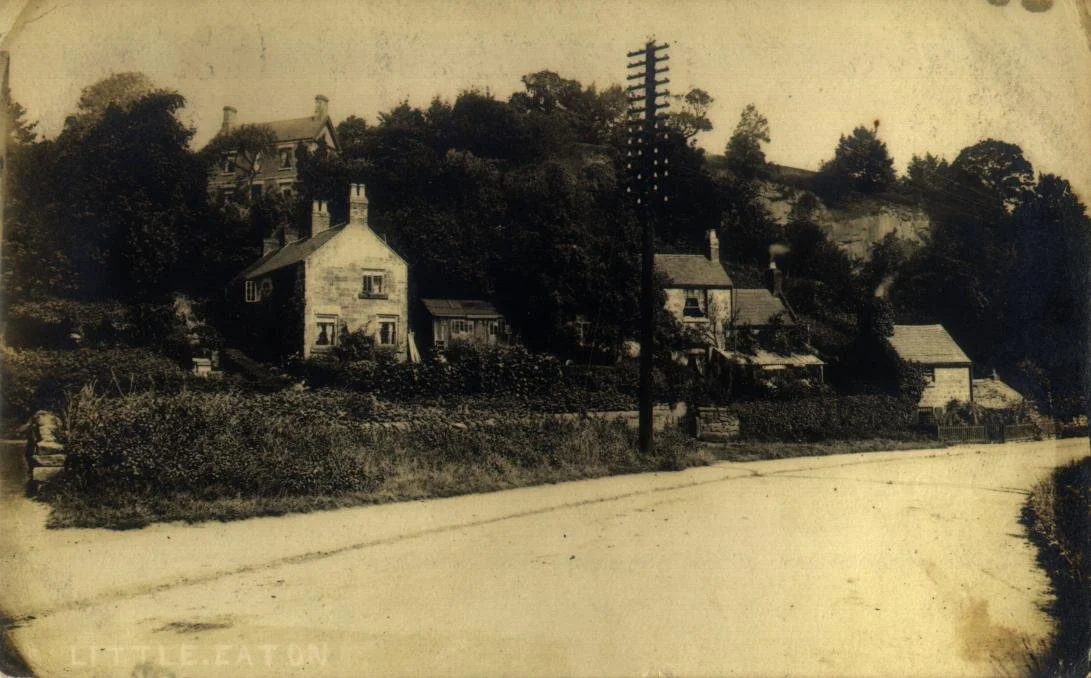
Mount Pleasant was built in about 1800 by William Strutt (1756-1830), first son of Jedediah Strutt. William Strutt was an industrialist who built many homes for Strutts’ employees and for his family. One source says William Strutt built Mount Pleasant for his own use. More likely, he built it for the manager of a nearby quarry which he owned. Houses built by William Strutt were substantial, built of stone, and of high quality.
Owners/Copyholders
1812
The house was recorded as let to Joseph and Ann Johnson (nee Hunt). Joseph was a stonemason. They had 8 children. These included John (1790-1839), who became landlord of the Delvers Inn (later named The Queens Head); Samuel (1807-1853), a stonemason; Anne (1811-1837), who married Joseph Poole, blacksmith; and Mary (1802-1869), who married Francis Lowe and, when he died, married Joseph Poole when her sister Anne died in 1837. This marriage was unlawful at the time; as marrying a deceased wife’s sister was prohibited.
1853
After their parents died, the house went first to Samuel Johnson and his wife Ann (nee Garrett). Then to his sister Mary, who took over the copyhold when Samuel died in 1853. She was by then the wife of Joseph Poole.
By 1866, according to the schedule prepared for the Duke of Devonshire in that year (see below), Joseph and Mary Poole had moved next door and their youngest daughter Anne was living at Mount Pleasant with her husband Joseph Hurst.
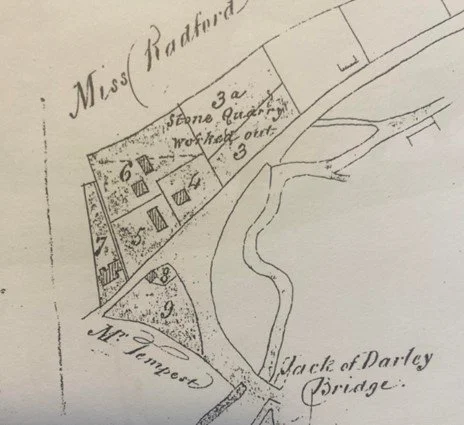
A map produced for the Ecclesiastical Commission in 1866
3 and 3a. Occupier John Tomilnson. Stone quarry worked out and used as a road to Mr Strutt’s quarry
4. Occupiers Thomas and Harriet Bullock. Cottage and small garden. Part occupied late Samuel Cresswell. Cottage, piggery, lumber house and garden
5. Occupiers Joseph and Mary Poole. Cottage and garden (And part of number 8)
6. Ann Johnson (nee Garratt). Cottage, coal house and garden. Large but not very productive
7. Ann Potts. Cottage and garden, William Green Cottage, Piggery and Garden, John Turner. Cottage and small garden and stable (roofless)
8. Joseph and Mary Poole (part)
9. William Green Garden Large, John Turner (part)
1867
It is on record that Sarah Johnson bought the house in 1867. She was Ann Hurst’s cousin and licencee of the Queen’s Head and owner of several other Little Eaton properties. She was born in 1818, daughter of John and Phoebe Johnson of the Queen’s Head. She lived at the pub, unmarried with two of her nephews, John and Charles Kerry. Her father John Johnson and Mary Poole (nee Johnson) were siblings.
However, Sarah Johnson probably never lived in the house. When she bought it, it was occupied by Anne Poole, Mary Poole’s youngest daughter and her husband Joseph Hurst. Anne Poole was a teacher at Little Eaton school. She and her cousin Edith Poole had been trained at Derby College for schoolmistresses. Anne married Joseph, a fellow teacher, 1865. Joseph Hurst paid £30 to his mother-in-law.
Joseph and Anne took over the copyhold on the death of Mary Poole in 1869, and then applied to the court to prevent Sarah Johnson from evicting them from the house.
In 1871, there was a hearing in the Court of Chancery before the Master of the Rolls. Solicitors for the plaintiff were Barber and Currey. The judgement read:
“Application by the plaintiff, Joseph Hurst of Little Eaton for an injunction to restrain the defendant Sarah Johnson who is a widow (note; Sarah never married) also living in Little Eaton from further proceeding in an act of ejection, brought by her in early 1870 to recover possession of a cottage and garden which she purchased in 1867 from the Ecclesiastical Commission. Application dismissed with costs.”
By the 1871 Census, Ann Hurst and her son Joe aged 5 were still in the house. Anne Hurst’s profession is listed as Schoolmistress. Her husband Joseph Hurstis not in residence on this Census but their son Joe Hurst (b. 1866) is listed as a 5-year-old scholar.
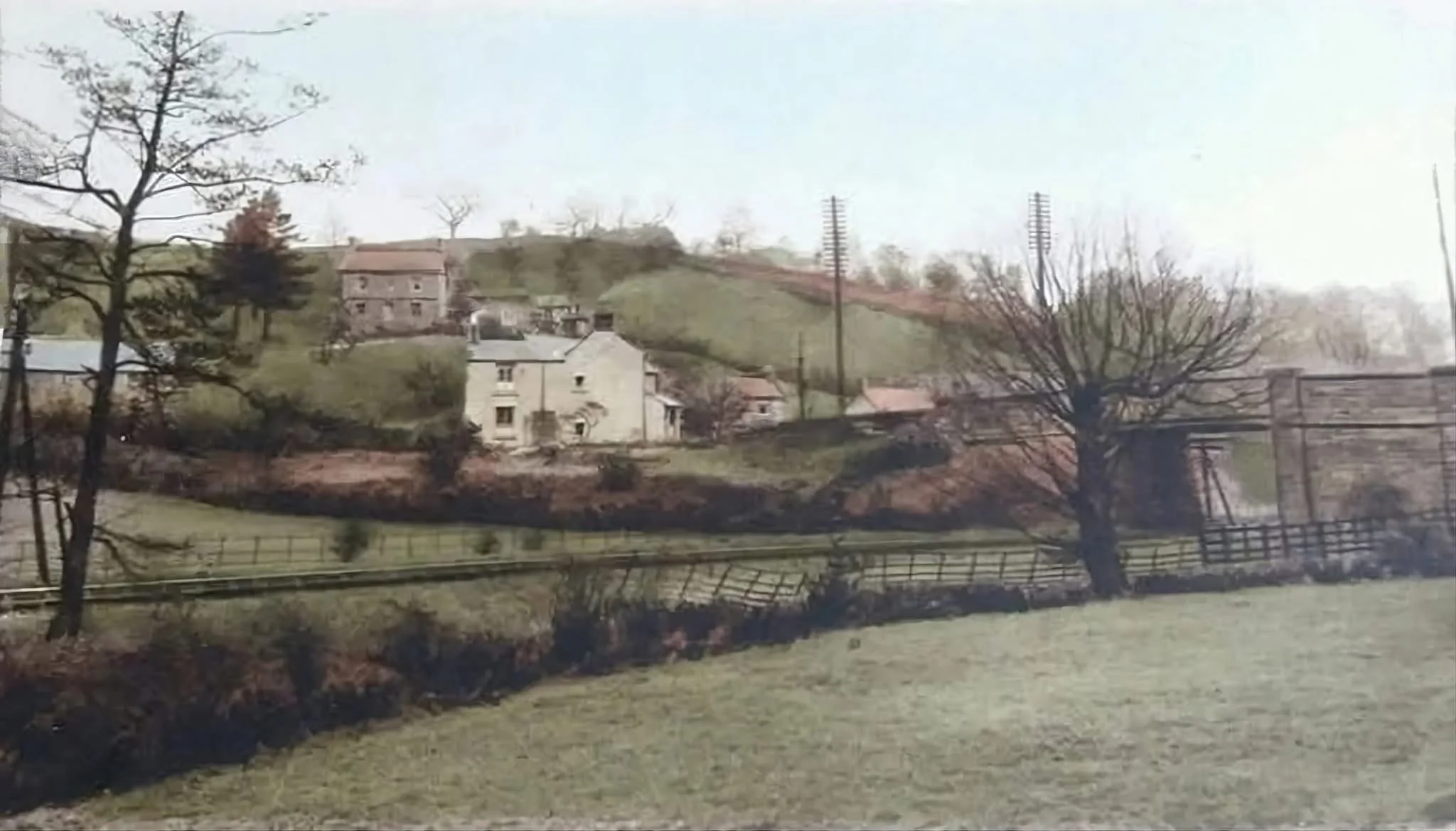
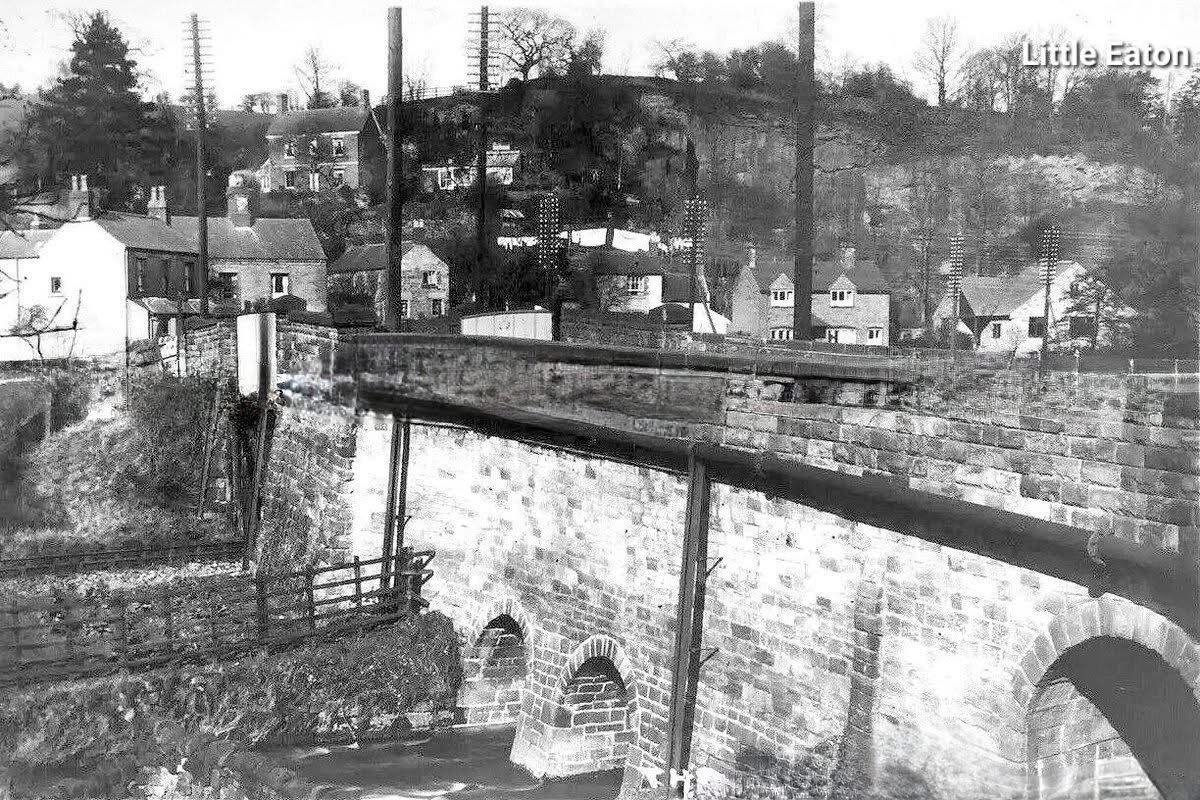
Mount Pleasant, the railway line, gangway and Jack O Darley bridge
John Seal (Anne Hurst’s brother-in-law) is also listed as at the house for this Census. He was a stone mason. He had married Anne’s older half- sister Elizabeth Poole (1831-1877) in 1853. They lived at Stables Row, next to the Kings Head. They had 13 children. On the1871 Census, John’s wife, Elizabeth Seal is recorded as living at Stable’s Row with 6 children. Elizabeth died in 1877, aged 46, soon after giving birth to baby no.13. An inquest into her death was held in the Anchor Inn:
“Died suddenly, 3rd Aug 1877. Recently confined. Died of exhaustion, proceeding hemorrhage. Heat of the day and heavy labour were very much against Mrs Seal who had nearly succumbed to a previous confinement. Mr Hoskins, surgeon and the midwife not to blame”
1871Sarah Johnson still owned the house, but as mentioned above never lived there.Sarah died in 1895 at her then residence Pike’s Villa on Alfreton Road.
By the 1881 Census,John Seal, stone mason and widower aged 50, is listed as occupying the house with most of his younger children. It was likely that he had been a tenant of Sarah Johnson from about the time of his wife’s death (1877) until 1895, when Sarah Johnson died.
In the 1891 Census, John Seal hadreached the aged of 60 and was still listed as a stone mason. Also in the house were his 7 youngest children: Herbert (b. 1864), Florence (1866), Joseph (1869), Charles (1872), John Andrew (1873), Annie Elizabeth (1876). John Seal died in 1897
[One of these children, Florence born in 1866, was working in Sarah Johnson’s Queen’s Head Inn in 1878, aged 12, when she was injured by Arthur Ward with a broken glass, Sarah Johnson took him to court, and he was fined 10 shillings]
1897
The copyhold was transferred toCharles Kerry following the death of Sarah Johnson. He was Sarah Johnson’s nephew. Charles Kerry, together with his brother John, had been living at the Queen’s Head with Sarah Johnson. In 1901 his address was given as Alfreton Rd. He is recorded as being a builder, bricklayer, and stonemason. He never married.
He left the Seal family in the house as his tenants. Charles Kerry and John Joseph Tatam had been executors of Sarah Johnson’s Will.
Charles Kerry died in 1912, so John Tatam was responsible for selling the house after that.
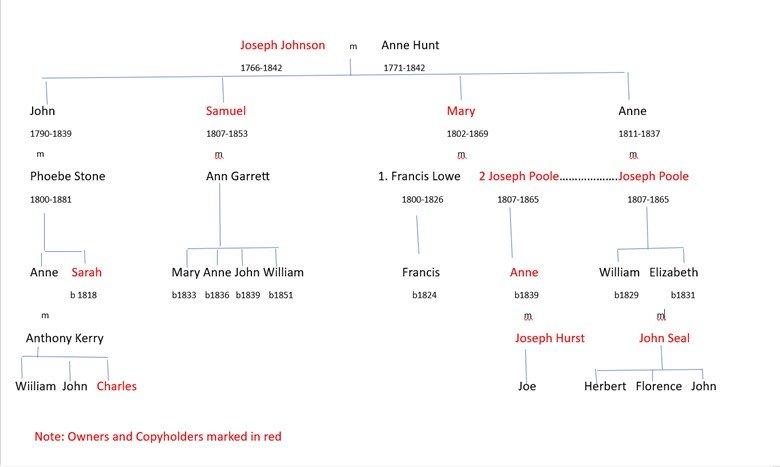
Owners / Copyholders 1800 to 1912
1901 Census: Herbert Seale, son of John and Elizabeth Seal, was still living at Mount Pleasant with his wife Annie (nee Holland) whom he had married in 1899, with 2 young children, and Herbert’s sister, Florence (aged 35) as housekeeper, and brother John who was a telegraph laborer. They all moved soon after.
1911
In 1911, Mount Pleasant is recorded as a seven-roomed house. (This does not include bathroom, scullery etc.).
James and Elizabeth Brindley were in the house. They had married in Codnor in 1891. Before they came to Little Eaton, they were recorded as living in Alvaston with their 4 children. James was working for the Butterley Iron and Steelworks.
They lived with their children: -
William Samuel, born 1893
Eva, born 1894
Emmeline Vera, born 1896
Horace Reginald, born 1897
1939
In the 1921 Census and the 1939 record, James and Elizabeth Brindley were still living at Mount Pleasant. In 1916, their son William Samuel had married Constance Hilda Birkinshaw, and in 1939 they lived at Hill View, New Street, with Constance’s sister Elsie Dorothy Birkinshaw.
Constance died in 1953. William Samuel later married Constance’s sister Elsie in 1955 but when she too died 2 years later aged 60, he married Irene Wood.
He died in 1969 and is buried with his first two wives in St Paul’s Churchyard [The 1907 Act: Deceased Wife's Sister - removed the impediment to marrying a deceased wife’s sister]
James Brindley and his wife Elizabeth were both staunch members and workers for the local Methodist Chapel (built in 1906 and now Baines Hall on Alfreton Rd.) and well known for their help and support in the village.
In 1947 James Brindley joined other villagers and Parish Council Members in what became known as “The Battle of the Footpaths” or “Operation Open the Pathway” claiming the privilege of being the first to cut the wire obstructing the pathway. “Let me do this”
Elizabeth Brindley died in 1949, aged 83 at Mount Pleasant. She and her husband are both buried in Little Eaton churchyard.
In 1951, James sold Mount Pleasant to Kenneth Geoffrey Parkinson, and went to live with his son at Hill View, 2, New St. where he died in 1955.
By the 1960s, Robert and Isabel Evans and their children Dennis, Joan and Sharon were in the house. Denis became Chairman of the Sports and Carnival Committees in the 1980s and 1990s.
The house was sold to Steve and Jean Poyser-Darby in 2016. Many thanks to them for their help with this article, which was written by Ruth and Philip Hunter.